


Mouth cancer is a malignant growth which can occur in any part of the mouth, including the lips, cheeks, tongue and throat.
Oral cancer can be divided into two different types: cancers of the oral cavity, and oropharyngeal cancer. Oral cancers are now the sixth most common cancer in the world.
Did you know that over 7,000 people in the UK are diagnosed with mouth cancer every year and it is on the rise. It claims the lives of more people than testicular and cervical cancer combined.
Cancers of the oral cavity occur where there is a tumour inside the oral cavity. This includes the lips, the linings of the cheeks (buccal mucosa), the front 2/3 of the tongue, under the tongue, gums and the hard roof of the mouth (hard palate).
Oropharyngeal cancer occurs where there is a tumour in the back 1/3 of the tongue, the soft area at the back of the roof of the mouth (soft palate), the tonsils and the back wall of the throat.
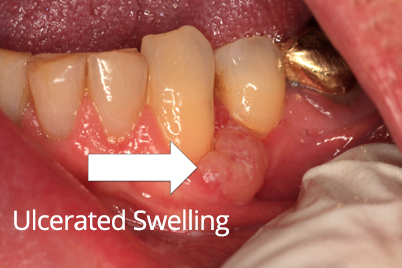
Symptoms of oral cancer can include:
Catch it early!
Caught early, oral cancer has a 90% survival rate, but overall, the 5yr survival rate is about 50%.
Our dentists carry out oral cancer checks at every examination.
The cause of oral cancers is not always clear, but the risk for developing oral cancer is raised by a number of factors.
Smoking tobacco is thought to contribute to 75% of oral and oropharyngeal cancers in the UK. Smokers have a 6 times greater risk of developing oral and oropharyngeal cancers than non-smokers. Exposure to second hand smoke also causes a small increase in the risk of developing such cancers. Chewing tobacco or betel quid is also known to cause oral cancers, and is not a safe alternative to cigarettes. Smoking also contributes to susceptibility to gum disease.
Research has shown that drinking alcohol causes around 30% of oral and oropharyngeal cancers. Heavy drinkers have a 5-10 times greater risk of developing cancer, but even a small amount of alcohol can increase the risk. Those who both drink and smoke have a 30 times greater risk of developing oral cancer than others.
Other risk factors include age (over 50), male: females 2:1 (from 5:1 fifty years ago), family history of cancer, persistent Candida (yeast) infections of the mouth, viruses such as the HPV virus (especially for oro-pharyngeal cancer), immune deficiency disease, dietary deficiencies, anaemia, and sunlight or UV radiation (to the lips).
During your check-up, your dentist will examine your entire mouth, not just your teeth, to look for signs of cancer and other oral disease.
You should visit your dentist as frequently as advised for a check-up, or sooner if you are concerned that you are experiencing any of the aforementioned symptoms. Early detection of oral cancers is important, as early detection greatly increases the 5-year survival rate.
It is important to minimise the risk factors for oral cancers, such as by reducing alcohol intake or smoking cessation. It is thought that around 9 in 10 cases of oral cancer could be prevented by lifestyle changes such as these. Reducing alcohol and stopping smoking would also reduce the risk of other health conditions and cancers, such as liver and lung cancer respectively. It is also recommended to eat a healthy balanced diet and to increase the intake of non-starchy fruit and vegetables.
Following the daily drinking guidelines will help to reduce your risk of oral cancers. If you’re trying to cut down on drinking, it might be useful to set yourself a limit on how much you’re going to drink, or set yourself a budget of how much you will spend on alcohol. The Chief Medical Officer of England suggests not to regularly drink more than 14 units of alcohol per week, which of course equates to 2 units per day.
Numerous treatments have been shown to be effective for smokers who want to quit, such as counselling and behavioural therapies. Medications such as Nicotine replacement therapy (NRT) which can be purchased from pharmacies, Varenicline (Champix), Bupropion (Zyban) both of which are available on prescription from your GP, or use of E-cigarettes may help. Medications such as those mentioned can help to reduce the unpleasant side effects of nicotine withdrawal. Using counselling and medication in combination is more effective than either one alone. As of July 2017, NHS Choices website describes Varenicline as the most effective medication for aiding smoking cessation.
You can also self examine to look for the early signs of mouth cancer:
As a word of reassurance, there are a number of conditions that appear in the mouth as lumps and whitish patches which are very innocent. So, if you find something, do not panic, just get it checked by your dentist!
For more information please visit the Mouth Cancer Foundation Website or the Mouth Cancer Awareness Month website.


We are located in the heart of Sevenoaks on the first floor of a wonderful Grade II listed building, originally built in 1818 as Lady Boswell School. We are delighted to say that we have our own dedicated lift.
1st Floor, Lady Boswell House, 42-44 London Road, Sevenoaks, Kent, TN13 1AS
Tel. 01732 459222 / Email us at admin@atkinsonbrignall.co.uk


Copyright © Atkinson Brignall Caring Dentistry • 1st Floor Lady Boswell House, 42-44 London Road, Sevenoaks, Kent, TN13 1AS