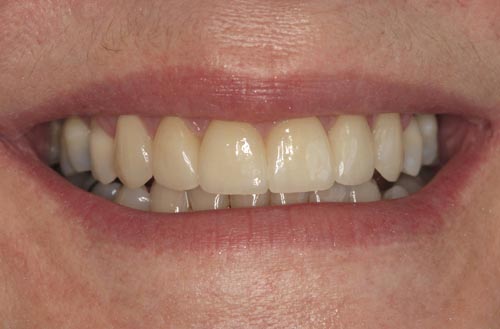
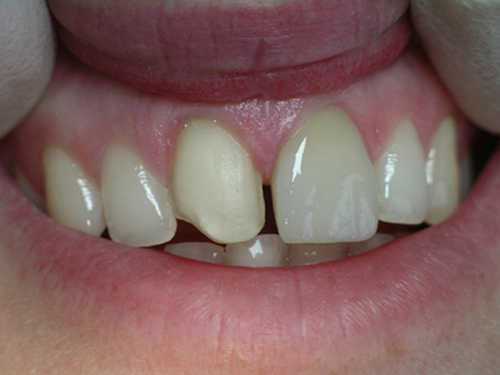
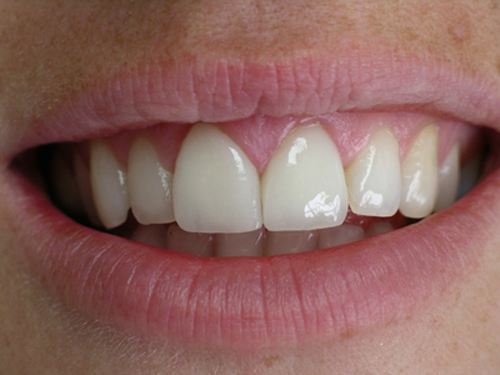
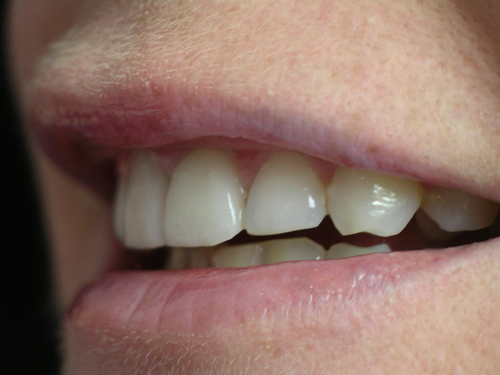
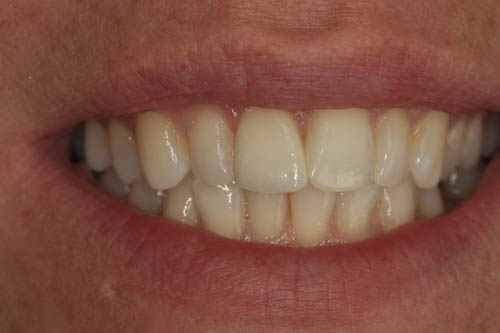
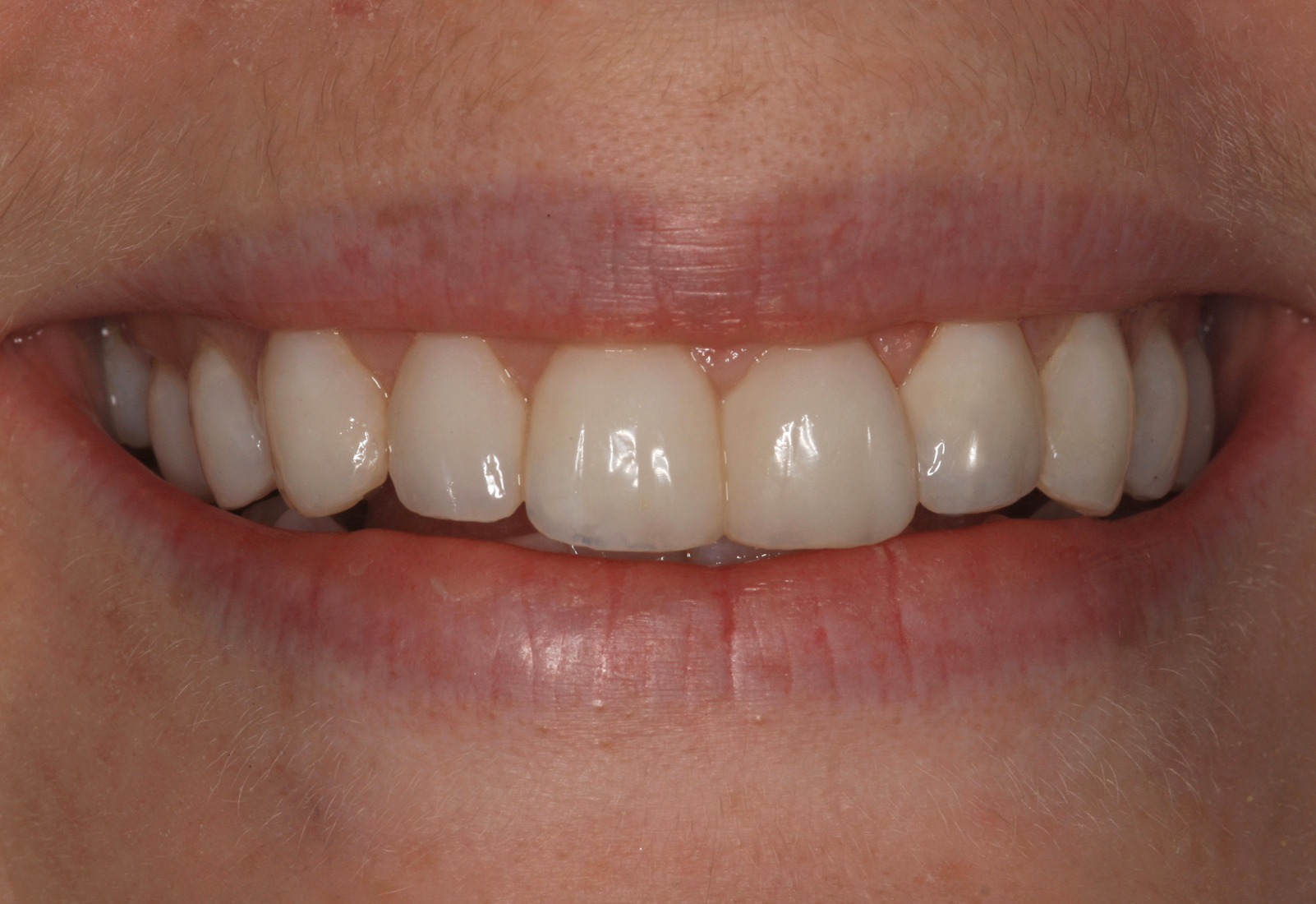
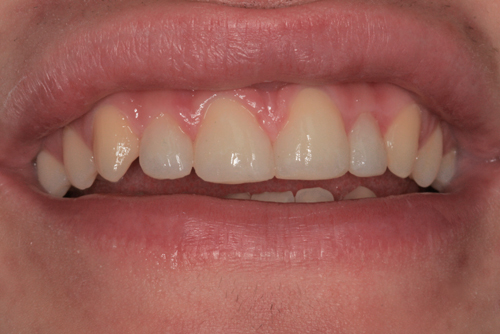
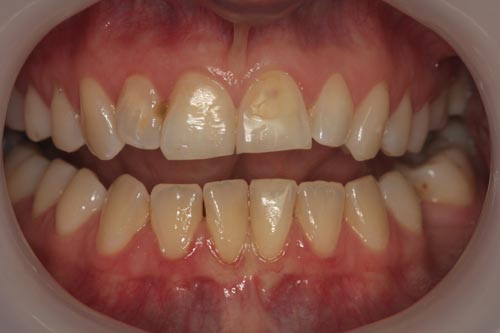
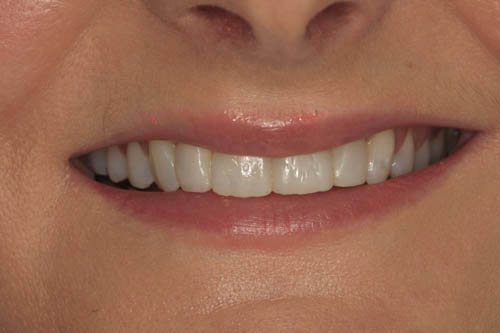
No other treatment has changed the face of Cosmetic Dentistry like Veneers. Dental veneers can be used to subtly or dramatically transform your smile. Veneers can be made out of either composite filling material often with no initial tooth preparation, hand crafted by the dentist to achieve a beautiful appearance or alternatively, as most people know them, out of technician crafted porcelain.
Veneers of either type can rebuild tooth profiles, align crooked teeth, close gaps and correct mild orthodontic irregularities without lengthy and costly orthodontic treatment. Where there is significant irregularity a short course of Inman Aligner treatment can sometimes be used prior to veneer placement.
 Porcelain is stronger than composite materials and can, with the help of expert ceramicist technicians in the laboratory, create stunningly beautiful smiles. Porcelain veneers can be envisaged as being a bit like a false fingernail. Dental veneers are widely used by many celebrities to improve their appearance and smiles, and have featured in many television makeover programmes. It is possible to choose the colour and shape of the final veneers before we start treatment.
The porcelain technologies allow restorations that have the colours, translucency and texture of natural enamel, and resist staining and decay whilst maintaining a natural appearance.
 Some tooth preparation is almost always needed, though the amount varies from case to case, but it is usually a minimally invasive technique that can often be completed within 2-3 visits. So called, “no preparation “ veneers are available but are only suitable for a limited number of patients. As with crowns, good looking temporary veneers can be provided between appointments. Once made, veneers can be tried in for you to assess the appearance and if need be, make any alterations, before final fitting with a very strong adhesive.
Veneers can also be created by hand at the chairside out of characterised, tooth coloured “composite” filling material. The material is directly bonded to the tooth structure in carefully structured layers, to mimic natural tooth anatomy. This technique is very conservative indeed, and can produce excellent results. Unlike porcelain, veneers produced by this method are likely to need repolishing intermittently to restore their optimal appearance. Because there is no laboratory manufacture involved, their cost tends to be lower than porcelain, though the technique is very demanding, and the results very much depends on the artistry, experience and planning skills of the dentist carrying out the treatment.
See also Bonding
For further cases and more detailed before and after images, please see www.sevenoakssmile.co.uk